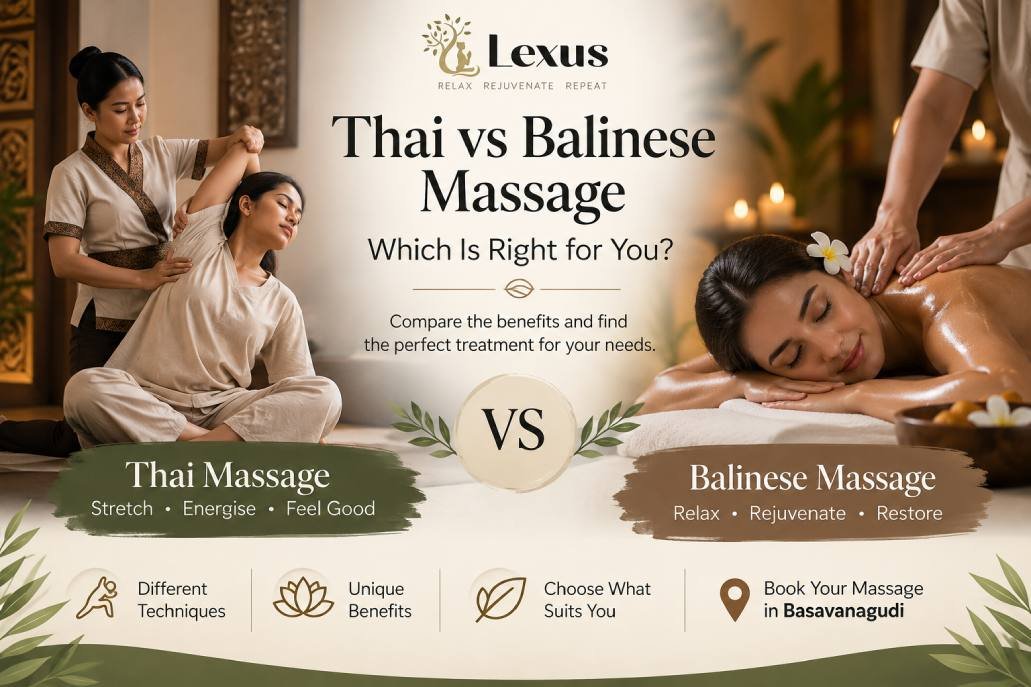
Choosing a massage is not always as simple as picking the first treatment on a spa menu. Thai and Balinese massage are both popular choices but they offer noticeably different experiences. If you are comparing Thai vs Balinese massage, understanding those differences can help you choose a treatment that matches what your body needs and the kind of relaxation you want.
For people looking for a massage in Basavanagudi, the decision often comes down to one question: do you want more stretching and movement or a slower oil-based massage focused on relaxation?
Thai massage is traditionally associated with assisted stretching, pressure and rhythmic bodywork. Balinese massage generally combines massage techniques with oils and may include long strokes, pressure and gentle movements.
Neither treatment is automatically better. The right choice depends on your comfort level, preferences and goals.
Thai vs Balinese Massage: What Is the Difference?
The simplest way to understand the difference is to look at how each massage is typically performed.
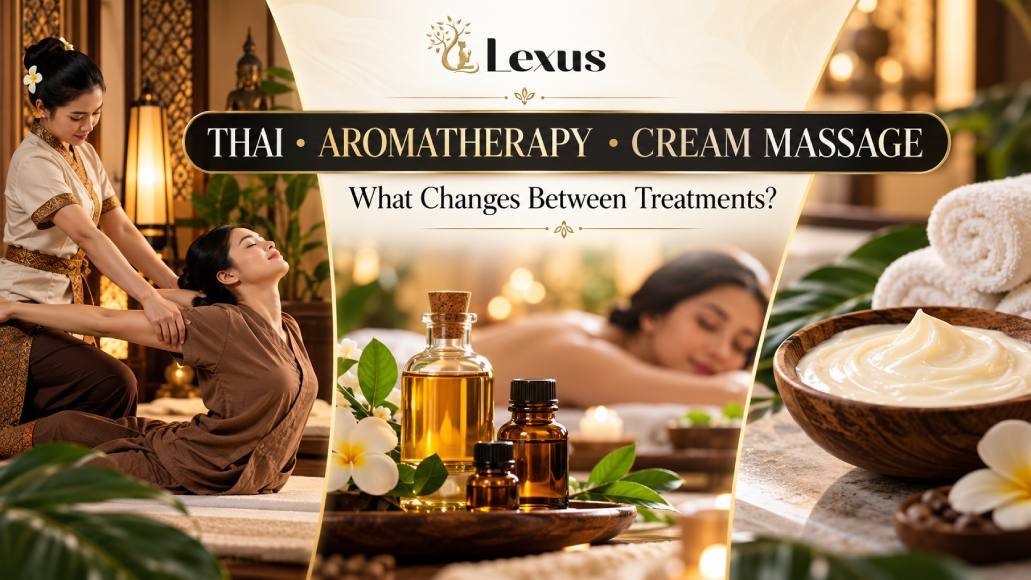
Thai massage is often performed with the recipient wearing comfortable clothing. The therapist uses hands, thumbs, elbows or other parts of the body to apply pressure while guiding the body through gentle stretches and movements.
Balinese massage commonly uses massage oil and combines techniques such as long strokes, kneading and pressure. The overall experience is often designed to feel calming and restorative.
Here is a quick comparison:
Feature | Thai Massage | Balinese Massage |
Main focus | Stretching, pressure and mobility | Relaxation, oil massage and muscle comfort |
Typical clothing | Comfortable clothing | Usually performed with massage oil |
Movement | More active and assisted | Generally slower and more relaxing |
Massage oil | Usually not central | Commonly used |
Best suited for | People who enjoy stretching | People seeking a calming massage |
Overall feel | Energising and physical | Relaxing and soothing |
These are general characteristics. The exact experience can vary based on the therapist, spa and treatment style.
What Is Thai Massage?
Thai massage has a distinctive approach because it combines pressure with assisted movement. Instead of simply lying still while the therapist works on the muscles, you may be guided through gentle stretches and positions.
What Can You Expect?
A typical Thai massage may involve:
- Rhythmic pressure along different areas of the body
- Gentle assisted stretching
- Movement of the arms and legs
- Pressure applied using hands, thumbs or elbows
- Focus on areas that feel tight or restricted
The treatment can feel more active than a conventional oil massage. Some people enjoy this because they like the sense of movement and physical engagement.
Who May Prefer Thai Massage?
Thai massage may appeal to you if you:
- Enjoy stretching
- Prefer a more active massage experience
- Feel physically stiff after long periods of sitting
- Want a massage that combines pressure and movement
- Do not mind remaining clothed during treatment
For example, someone who spends most of the day at a desk may prefer the movement and stretching involved in a Thai-style massage.
What Is Balinese Massage?
Balinese massage is generally associated with a relaxing oil-based experience. It can combine different massage techniques to create a treatment that feels both calming and physically soothing.
What Can You Expect?
A Balinese massage may include:
- Long, flowing massage strokes
- Kneading
- Moderate pressure
- Massage oil
- Attention to areas of muscular tension
- A calm and relaxing pace
The combination of oil and flowing movements can make the treatment feel particularly soothing.
Who May Prefer Balinese Massage?
Balinese massage may be a better fit if you:
- Want to relax and unwind
- Prefer an oil massage
- Enjoy slower massage movements
- Want a calming spa experience
- Prefer less assisted stretching
If your main goal is to switch off after a demanding day, a Balinese massage may feel like the more natural choice.
Thai or Balinese Massage: Which Feels More Relaxing?
This depends on what relaxation means to you.
For some people, relaxation comes from stretching tight muscles and feeling more mobile afterward. Thai massage may provide that experience.
For others, relaxation means lying comfortably while slow massage movements and soothing oils help create a peaceful spa experience. Balinese massage may suit that preference better.
The best option is not about choosing the massage with the biggest list of techniques. It is about choosing the experience that feels right for your body and expectations.

Which Massage Is Better for Stress Relief?
If stress relief is your main priority, both treatments can be worthwhile, but they create relaxation in different ways.
Thai massage may feel refreshing because it combines pressure with movement and stretching. Some people like the physical engagement because it helps them feel less restricted after sitting or working for long periods.
Balinese massage generally offers a slower and more soothing experience. The use of massage oil, flowing strokes and a calm pace can make it appealing when your priority is simply to relax.
For a quieter, spa-style experience, Balinese massage may be the better starting point. For movement-focused relaxation, Thai massage may be more suitable.
Which Is Better for Muscle Tension?
Your preference for pressure and movement matters here.
Thai massage can be appealing if you enjoy assisted stretching and firmer pressure. It may feel more dynamic because the therapist works with your body through different positions and movements.
Balinese massage can be a good option if you prefer massage strokes and kneading over extensive stretching. The therapist can focus attention on areas where you commonly experience muscular tightness.
If you have persistent, severe or unexplained pain, a massage should not replace professional medical evaluation.
Which Massage Is Better for Flexibility?
Thai massage generally has the advantage if assisted stretching is an important part of what you want from a treatment.
The experience can involve controlled movements designed to gently move different parts of the body. However, flexibility varies from person to person and a massage should never involve forcing a joint or stretching beyond a comfortable range.
If you are new to Thai massage, tell your therapist that you prefer gentle stretching. Good communication can make the experience much more comfortable.
Which Massage Should You Choose?
Use this simple guide:
If your priority is… | Consider |
Gentle assisted stretching | Thai massage |
A more active massage | Thai massage |
Relaxation with massage oil | Balinese massage |
A slower spa experience | Balinese massage |
Feeling physically mobile | Thai massage |
Unwinding after a stressful day | Balinese massage |
Remember that these are general guidelines rather than strict rules. A skilled therapist can often adjust pressure, pace and focus according to your preferences.
How to Prepare for Your Massage
Whichever treatment you choose, a little preparation can improve the experience.
Before Your Appointment
- Avoid a heavy meal immediately before the session. Give your body enough time to digest.
- Stay hydrated. Drink water during the day without overdoing it immediately before your appointment.
- Wear suitable clothing. For Thai massage, choose comfortable clothing that allows easy movement.
- Communicate your preferences. Tell the therapist if you prefer light, moderate or firmer pressure.
- Mention areas of concern. Let the therapist know if there are areas you want them to focus on or avoid.
During the Treatment
Speak up if something feels uncomfortable. Massage should not require you to tolerate unnecessary pain.
You can ask the therapist to adjust pressure, movement or positioning. Clear communication is especially important during Thai massage because assisted stretching is part of the experience.
A Simple Thai vs Balinese Massage Checklist
Before booking, ask yourself:
- Do I want stretching and movement?
- Do I prefer an oil-based massage?
- Am I looking mainly for relaxation?
- Do I enjoy moderate or firm pressure?
- Would I prefer to remain comfortably clothed?
- Do I want a more active or more restful experience?
- Have I told the therapist about any relevant physical concerns?
If you checked more boxes for stretching and movement, Thai massage may be a good fit. If relaxation and an oil-based experience sound more appealing, consider Balinese massage.
Expert Tips for First-Time Clients
If you are trying either treatment for the first time, do not feel pressured to choose based only on the name.
Ask the spa what the specific treatment includes. Different spas can use different techniques under the same treatment name.
At Lexus International Spa, clients in Basavanagudi can discuss their preferences before selecting a suitable massage experience. If you are unsure whether Thai or Balinese massage is better for you, explaining your expectations can help you make a more informed choice.
Also consider the intensity you want. A massage designed around relaxation should not feel like a test of endurance. Comfort and communication should remain priorities throughout the session.
Key Takeaways
- Thai massage focuses more on pressure, movement and assisted stretching.
- Balinese massage generally combines oil, flowing strokes and relaxing techniques.
- Thai massage may suit people who enjoy a more active treatment.
- Balinese massage may suit people looking for a calmer spa experience.
- Neither treatment is universally better.
- Your comfort, goals and massage preferences should guide the decision.
- Always communicate your preferred pressure and any areas that need special attention.
Frequently Asked Questions
1. What is the main difference between Thai and Balinese massage?
Thai massage generally emphasizes pressure, movement and assisted stretching, while Balinese massage commonly uses oil, flowing strokes and kneading for a more relaxing experience.
2. Is Thai massage more intense than Balinese massage?
Thai massage can feel more active because it may include assisted stretching and deeper pressure. However, intensity depends on the therapist and the pressure you request.
3. Is Balinese massage good for relaxation?
Balinese massage is often chosen for relaxation because it commonly uses massage oil, flowing strokes and a slower treatment style.
4. Should I choose Thai or Balinese massage for my first massage?
If you enjoy stretching and movement, Thai massage may suit you. If you want a calm oil-based experience, Balinese massage may be a better starting point.
5. Can I ask for lighter pressure during a massage?
Yes. You should communicate your preferred pressure before and during the session. A therapist can adjust the treatment to make it more comfortable.
6. Where can I get Thai or Balinese massage in Basavanagudi?
Lexus International Spa offers massage experiences for clients looking for wellness and relaxation in Basavanagudi. Contact the spa to discuss the available treatment options and choose the one that fits your preferences.
Conclusion
When comparing Thai vs Balinese massage, the right choice comes down to the experience you want.
Choose Thai massage if stretching, movement and a more physically engaging treatment appeal to you. Choose Balinese massage if you prefer massage oil, flowing strokes and a slower approach to relaxation.
If you are still undecided, you do not need to overthink it. Talk to the massage team at Lexus International Spa in Basavanagudi and explain what you want from your session. A conversation about your preferences can make it easier to select the right treatment.
Ready to relax? Contact Lexus International Spa to explore Thai or Balinese massage in Basavanagudi and book a session that suits your needs.