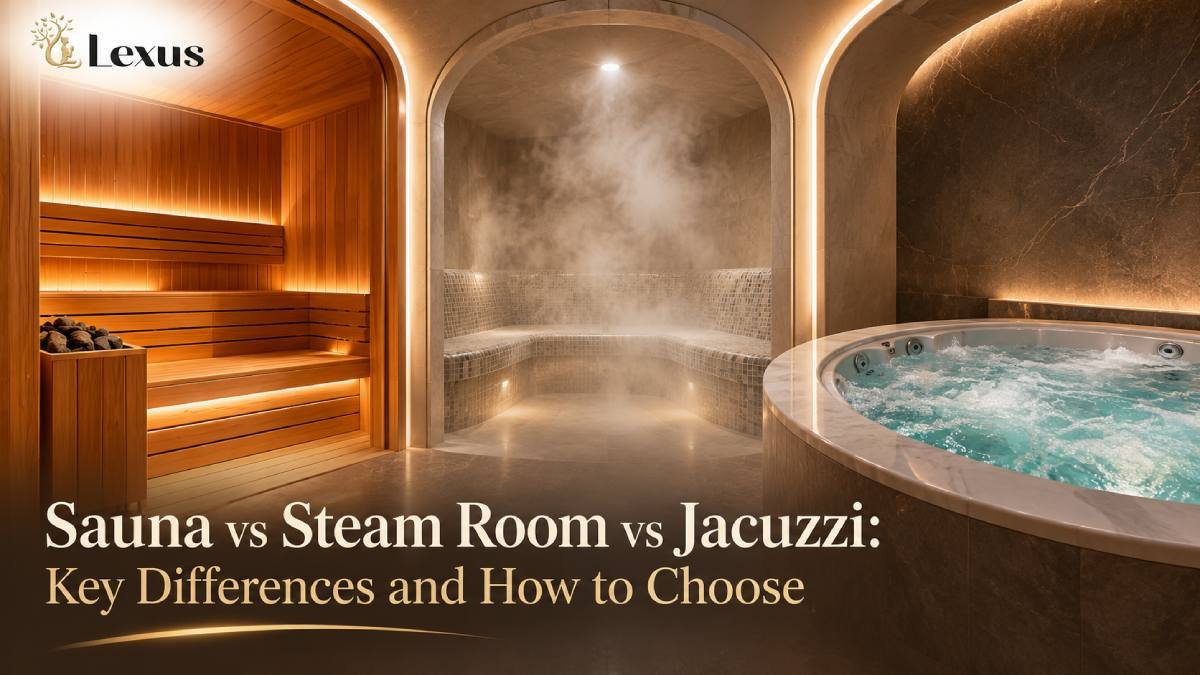
A sauna uses dry heat, a steam room uses hot humid air, and a Jacuzzi uses heated water, often with jets. They create different experiences, so your comfort, preferences and health needs should guide your choice.
When comparing a Spa in Bangalore, this guide explains the differences and precautions to check.
Key Takeaways
- A sauna provides dry heat; a steam room provides hot, humid air.
- A Jacuzzi uses warm water and may include massage jets.
- Choose based on comfort, not detox or weight-loss claims.
- Hydrate, follow facility guidance and leave if you feel unwell.
- Confirm current facility availability before booking.

Sauna vs Steam Room vs Jacuzzi: What Is the Main Difference?
The main difference is how each facility delivers heat. A traditional sauna warms the air with dry heat, a steam room fills the space with humid steam, and a Jacuzzi immerses you in heated water, often with jets. These differences change how each experience feels.
Feature | Sauna | Steam room | Jacuzzi |
Heat source | Sauna heater | Steam generator | Heated water |
Environment | Dry heat | Hot, humid air | Warm water |
Body contact | Seated in heated room | Seated in steam-filled room | Body immersed in water |
Main sensation | Dry warmth and sweating | Moist warmth | Buoyancy, warmth and jets |
Preference | Dry heat | Humid heat | Water immersion |
1. What Is a Sauna and How Does It Work?
A traditional sauna is a heated room designed to expose the body to dry warmth. A heater raises the room temperature while humidity generally remains low, although some saunas allow water to be poured over hot stones. The result is an intense, dry-heat environment.
Cleveland Clinic describes traditional sauna temperatures of around 65–90°C, with humidity usually below 20%.
You sit as heated air warms your body. Hydrate and follow session limits.
A sauna may suit people who prefer dry heat and quiet relaxation. Sweating does not remove toxins or body fat; short-term weight changes are mainly fluid loss.
2. What Is a Steam Room and How Is It Different?
A steam room is an enclosed space filled with hot water vapour from a steam generator. Unlike a traditional sauna, it has very high humidity and usually a lower air temperature. Because sweat evaporates less easily in humid air, the room can still feel intensely hot.
Condensation makes surfaces damp, but you remain seated in the steam-filled room rather than immersed in water.
A steam room may suit people who prefer humid warmth. It is not a proven treatment for respiratory illness. Leave if you feel breathless or dizzy; people with respiratory conditions should ask a healthcare professional about suitability.
3. What Is a Jacuzzi and How Does It Work?
A Jacuzzi is commonly used to describe a heated whirlpool bath or hot tub with water circulation and jets. Unlike a sauna or steam room, it warms the body through direct contact with water. The moving water can create a gentle massaging sensation.
The experience depends on water temperature and jet strength.
A Jacuzzi may suit people who enjoy warm-water immersion and gentle water movement. Stronger jets or hotter water do not automatically provide greater benefits.
4. Sauna, Steam Room and Jacuzzi Compared for Different Needs
Choose according to the type of heat you enjoy, whether you want water immersion and how your body responds to warmth. Consider hygiene and comfort rather than detox claims. Choose the option that suits your own comfort and heat tolerance.
Your preference | Option to consider | Why |
Dry heat | Sauna | Heated air with relatively low humidity |
Moist, humid warmth | Steam room | Steam creates high humidity |
Warm water and jets | Jacuzzi | Water immersion and circulating jets |
Dislike enclosed humid spaces | Sauna or Jacuzzi | Choose based on dry heat and water comfort |
Prefer not to get wet | Sauna | You remain seated in a dry room |
Preferences are not medical advice. Ask a clinician if you have a health condition.
5. What Are the Possible Benefits and What Should You Not Expect?
Heat facilities may support relaxation and temporary comfort, but they do not remove toxins, create lasting weight loss or cure medical conditions. Sweating and temporary changes in muscle comfort are not proof of medical treatment. Benefits are not guaranteed or universal.
- Sauna: Dry heat may feel relaxing and soothe some muscle discomfort.
- Steam room: Humid warmth may feel soothing to people who enjoy moist air.
- Jacuzzi: Warm water and jets may help some people relax and feel less tense.
Weight lost through sweating is mainly water and returns with rehydration. A steam room does not clean the lungs, and a Jacuzzi does not treat an injury. Use heat facilities for comfort, not as healthcare.

6. Safety Precautions Before Using a Sauna, Steam Room or Jacuzzi
Heat exposure can cause dehydration, overheating, dizziness or faintness, particularly after alcohol or strenuous exercise. Pregnant people and those with cardiovascular conditions or certain medicines may need medical advice. Follow facility rules and stop if unwell. Heat can affect circulation and fluid balance.
Before using a heat facility:
- Drink water and avoid alcohol.
- Do not use it when feverish or dehydrated.
- Seek medical advice if pregnant, managing heart or blood-pressure conditions, or taking medicines that affect fluid balance.
- Leave if dizzy, weak, nauseated or short of breath.
Jacuzzi hygiene matters
The CDC warns that poorly maintained hot tubs can spread germs. Ask about water testing, disinfection and filtration; avoid tubs with visibly dirty water. CDC guidance says hot tub water should not exceed 40°C. Pregnant visitors should seek medical advice before use.
7. How to Use Heat Facilities More Comfortably
Start conservatively, follow posted time limits and cool down between exposures. Do not stay until you feel uncomfortable; leave rather than pushing through dizziness, nausea or excessive heat. If uncertain, ask staff first and take breaks as needed throughout the visit.
- Shower before entering shared facilities.
- Follow posted time and temperature guidance.
- Drink water and rehydrate afterward.
- Take breaks between heat sessions.
- Cool off if light-headed.
- Follow staff hygiene instructions.
If new to heat facilities, avoid combining all three into one long routine. Ask staff how to use them safely.
8. What to Check Before Choosing a Spa in Bangalore
Before booking, confirm facility availability, package inclusions and maintenance practices. Ask about session limits, temperatures, cleaning, towels, showers and health restrictions. Not every spa locally offers all three facilities. Check who maintains the equipment and whom to contact with concerns.
Ask whether each facility is operating, whether access costs extra, whether it is shared, how Jacuzzi water is tested, and whether temperature and time limits are posted. For a first-time spa visit, review the preparation guide before booking.
9. Sauna, Steam and Jacuzzi Facilities at Lexus International Spa
Lexus International Spa is in Basavanagudi, Bengaluru. Its homepage testimonials mention a Jacuzzi, sauna bath and steam session, but its published services page primarily lists massage treatments. Confirm current facility availability and booking arrangements directly with the spa. Availability can change, so confirm before travelling.
For a Spa in Bangalore visit, ask which facilities are available and what hygiene guidance applies. The spa’s menu lists Swedish, Balinese, Thai, aromatherapy and deep tissue massage.
FAQs
1. What is the main difference between a sauna and a steam room?
A sauna uses mainly dry heat, while a steam room uses hot, humid air. A sauna generally has a higher air temperature and lower humidity; a steam room feels damp because of the steam.
2. Is a Jacuzzi better than a sauna?
Neither is universally better. A Jacuzzi provides warm-water immersion and jets, while a sauna provides dry heat. Choose according to your comfort, preference and any medical advice you have received.
3. Which is better for relaxation, a sauna or steam room?
Both may feel relaxing. The better choice depends on whether you prefer dry warmth or humid heat. There is no clear evidence that one type of heat is best for everyone.
4. How long should I stay in a sauna or steam room?
Follow the facility’s posted time limits and start with a short session, especially if you are new to heat exposure. Leave if you feel dizzy, weak, nauseated or uncomfortable.
5. Can pregnant women use a sauna, steam room or Jacuzzi?
Pregnant people should seek advice from their healthcare professional before using heat facilities. Overheating, dehydration and faintness are concerns, particularly with hot tubs and sauna or steam exposure.
Conclusion
The difference between a sauna, steam room and Jacuzzi comes down to dry heat, humid air and warm-water immersion. Choose the experience that feels comfortable, check hygiene and operating rules, and take health precautions seriously.
If you are considering Lexus International Spa in Basavanagudi, contact the team to confirm which facilities are currently available before booking.