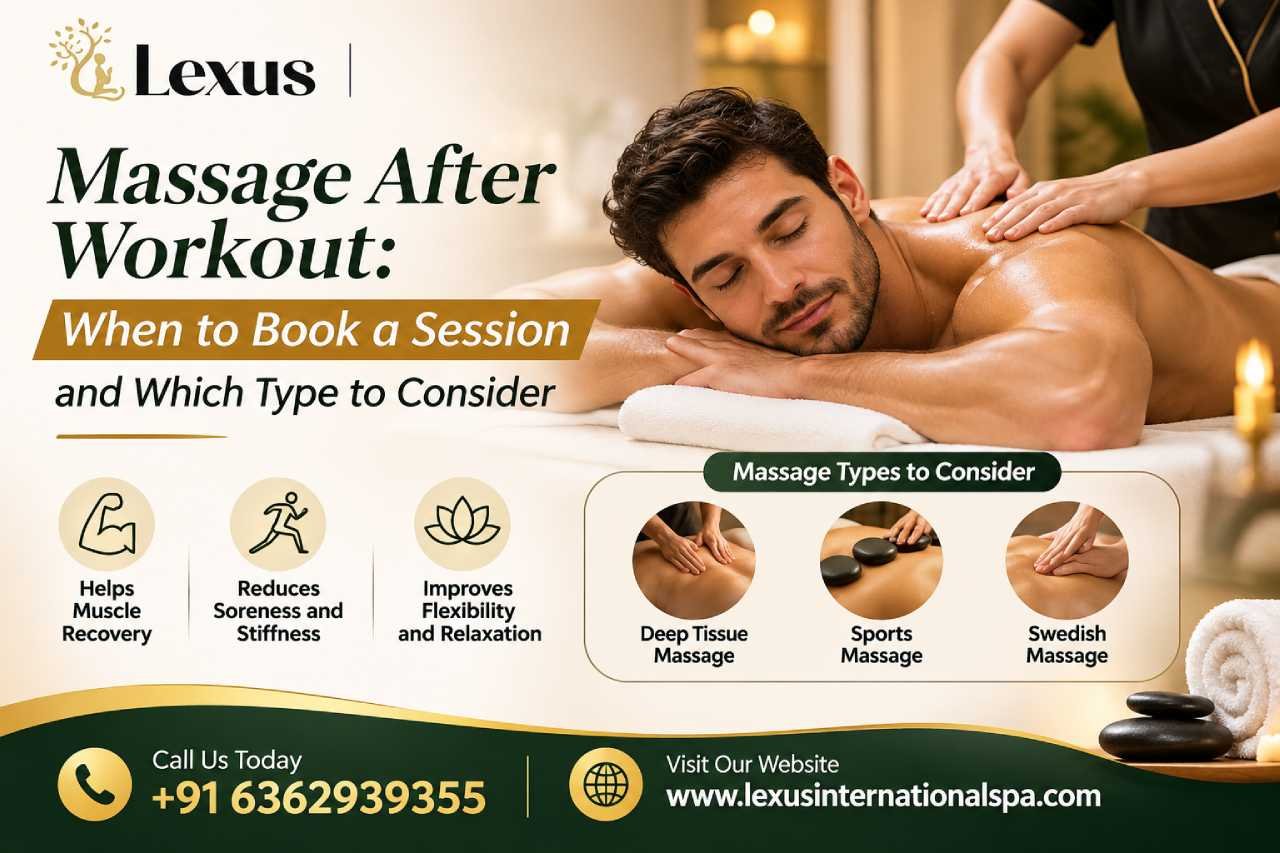
A demanding gym session, long run or strength workout can leave your muscles feeling tight and tender. A massage may help you feel more comfortable, but booking the right session matters. Massage after workout is best considered a recovery and relaxation option, not a shortcut that repairs every muscle problem or guarantees better athletic performance.
The right timing depends on how hard you trained, how your body feels and whether you have ordinary muscle soreness or a possible injury. If you are considering a massage in Bangalore, this guide explains when to book, which massage style may suit your needs and what to discuss with your therapist.
Key Takeaways
- There is no universal number of hours to wait after exercise.
- Let your breathing, heart rate and body temperature settle first.
- Choose gentle pressure for general relaxation or mild soreness.
- Avoid deep pressure over acute injuries, swelling or sharp pain.
- Massage may ease soreness, but it does not replace sleep, food and sensible training recovery.
Is Massage After Workout a Good Idea?
Massage after exercise may ease delayed-onset muscle soreness (DOMS) and slightly improve flexibility, but it is not a performance booster. Research has not found reliable improvements in strength, sprinting, jumping or endurance. It is optional, not a replacement for rest, hydration and nutrition.
DOMS commonly develops after unfamiliar or intense exercise, especially movements that involve lowering weights or running downhill. It often feels like tenderness, stiffness or discomfort when moving the affected muscles.
A 2020 systematic review and meta-analysis of 29 studies involving 1,012 participants found small benefits for soreness and flexibility, but no clear performance improvements. That means a massage may make you feel more comfortable while your body recovers naturally.
When Should You Book a Massage After Exercise?
The best time depends on the workout and your symptoms, not a fixed rule such as exactly two or six hours. After exercise, cool down, let your breathing return to normal, drink fluids and assess how you feel. If you are unusually sore, exhausted or unwell, postpone the appointment.
Use this guide:
After exercise | Practical decision |
Light workout, no discomfort | A gentle massage may be comfortable once you have cooled down |
Hard strength session | Consider waiting until you have assessed soreness and fatigue |
Delayed muscle soreness the next day | A gentle session may help with comfort if symptoms are mild |
Sharp pain, swelling or bruising | Do not massage the area; seek medical advice |
Heat exhaustion, dizziness or dehydration | Recover and address symptoms before considering a massage |
There is no proven ideal booking window for everyone. Avoid firm pressure when muscles are highly sensitive.
Which Massage Type Should You Choose After a Workout?
The most suitable massage depends on your goal, soreness level and pressure tolerance. Gentle techniques are often a sensible starting point for general post-workout relaxation, while firmer techniques should be selected carefully and adjusted to your comfort. Tell the therapist which muscles you trained and how they feel.
Massage type | When you might consider it | Important consideration |
Swedish massage | General relaxation and mild muscle tightness | Uses flowing strokes and kneading; request light or moderate pressure |
Deep tissue massage | Persistent areas of muscle tension, when appropriate | Firm pressure can be uncomfortable; it is not automatically better after exercise |
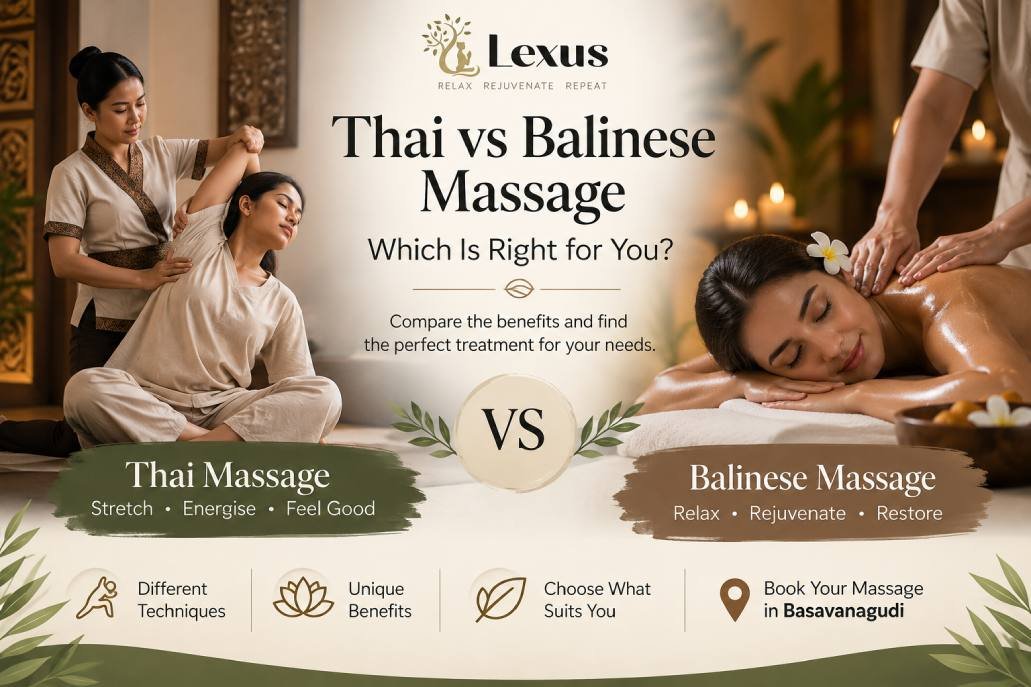
Thai body massage | If you enjoy assisted stretches and movement | Tell the therapist about tightness and avoid stretches that cause pain |
Balinese massage | Relaxation with flowing strokes and pressure techniques | Discuss pressure on tender muscle groups |
Hot oil massage | A relaxing session using warm oil | Confirm that the temperature and pressure feel comfortable |
Lexus International Spa lists Swedish, deep tissue, Thai, Balinese and hot oil massage among its services. The spa does not list a dedicated sports massage on the service page, so do not assume that a general spa treatment is equivalent to a sports physiotherapy session.
Should You Choose Deep Tissue Massage After a Hard Workout?

Deep tissue massage is not automatically the best choice after heavy exercise. It uses firmer, more focused pressure and may be unsuitable when muscles are acutely tender, bruised or injured. If you are simply looking to relax after training, ask about a lighter approach before choosing a firm-pressure session.
Discuss your symptoms and goals with the therapist first. Explain which muscles you trained and whether the discomfort is familiar.
Stop if pressure causes sharp pain, tingling or numbness. Do not use massage to push through an injury.
How to Tell Muscle Soreness From a Possible Injury
Ordinary post-workout soreness is often a dull ache or stiffness that develops gradually after exercise. An injury may involve sudden or sharp pain, marked swelling, bruising, weakness or difficulty using the affected area. These signs are not a diagnosis, but warrant medical assessment.
Typical delayed soreness | Warning signs that need assessment |
Develops hours after unfamiliar exercise | Sudden pain during a movement |
Tenderness across the muscles used | Sharp or localised pain |
Stiffness that eases with gentle movement | Significant swelling or bruising |
Usually improves gradually | Weakness or difficulty bearing weight |
Do not massage a suspected muscle tear, fresh sprain, significant swelling or unexplained severe pain. If you have chest pain, fainting, severe shortness of breath, or dark urine with severe muscle pain after intense exercise, seek urgent medical care.
What to Tell Your Massage Therapist Before the Session
A short conversation helps the therapist understand your workout, symptoms and pressure preferences. Mention the activity you completed, the muscles you trained, when soreness started and whether you have any injury, medical condition or recent procedure. Be specific rather than simply saying that you want a strong massage.
Tell the therapist:
- Whether you did strength training, running, cycling or another activity.
- Which muscles feel sore or tight.
- Whether the discomfort is mild, moderate or sharp.
- Whether you prefer light, medium or firm pressure.
- Any bruising, swelling, recent injury, surgery or health condition.
Ask the therapist to avoid an area, reduce pressure or stop if treatment feels uncomfortable.
What to Do Before and After Your Massage
Preparation helps make a session more comfortable. Cool down, drink normally, avoid arriving after a heavy meal and explain your needs. Afterward, follow your usual recovery routine. Allow time to rest if you feel tired, and avoid another intense training session until you feel ready.
Before your appointment:
- Complete a gradual cool-down rather than going straight from intense exercise to the massage table.
- Drink water according to thirst and your activity level.
- Have a light meal or snack if you are hungry.
- Shower if needed and arrive with enough time for a consultation.
After your appointment:
- Stand up slowly and notice how you feel.
- Drink water normally and eat a balanced meal.
- Choose gentle movement or rest according to comfort.
- Avoid treating temporary relief as proof that an injury has healed.
Considering a Massage in Bangalore at Lexus International Spa?
Lexus International Spa is in Basavanagudi, Bengaluru, and lists Swedish, deep tissue, Thai, Balinese and hot oil massage. If booking after exercise, explain your workout and soreness. Ask which treatment can be adjusted to your preferred pressure. Contact the spa team to confirm current availability and session details.
Do not book firm pressure simply because you trained hard. Choose according to how your body feels. If you suspect an injury, seek medical advice before booking.
FAQs
1. Can I get a massage immediately after a workout?
It is better to cool down first and assess how you feel. There is no universal waiting period, but avoid firm pressure when you are overheated, dizzy, dehydrated or unusually fatigued.
2. Is massage good for muscle soreness after the gym?
Massage may provide a small reduction in delayed-onset muscle soreness and may slightly improve flexibility. It does not reliably improve strength or athletic performance, and it cannot replace proper recovery habits.
3. Is deep tissue massage suitable after weight training?
Not automatically. Deep tissue uses firmer pressure and may aggravate very tender or injured areas. Discuss your symptoms with the therapist and consider lighter pressure if you have ordinary post-workout soreness.
4. Should I get a massage if my muscles are injured?
Avoid massaging an area with sharp pain, significant swelling, bruising or suspected injury. Seek medical assessment first, because massage is not a substitute for injury diagnosis or treatment.
5. Which massage should I choose after exercise?
For general relaxation or mild tightness, consider a gentle Swedish or Balinese-style session and request comfortable pressure. Thai massage involves assisted stretching, while deep tissue uses firmer pressure, so discuss your needs before choosing.
Conclusion
Massage after workout may ease soreness, but timing and pressure should match your condition. Cool down, distinguish stiffness from possible injury and choose comfortable pressure.
If you are considering Lexus International Spa in Basavanagudi, explain your training and soreness before booking. Choose a session for relaxation and comfort, while relying on appropriate rest, nutrition and medical care for recovery.